
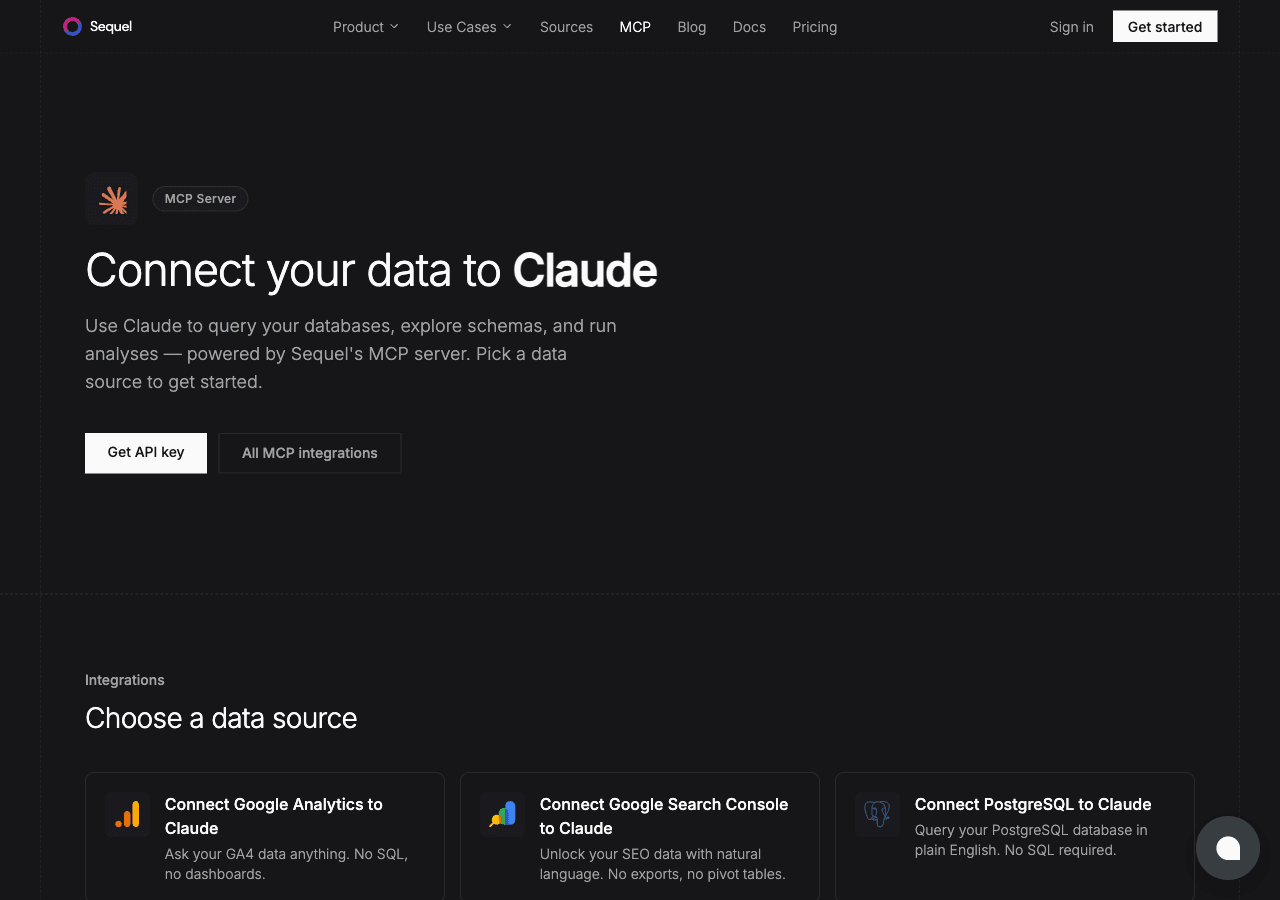
Google Search Console has all your site's search performance data: every query, every click, every ranking. Claude Desktop gives you a natural language chat interface. Put them together through Sequel's MCP server and you can just ask questions about your SEO data. No more clicking through dashboards or exporting spreadsheets.
What You'll Accomplish
After this setup, you'll be able to ask Claude Desktop:
- "What are my top 10 queries by clicks this month?"
- "Which pages have the most impressions but under 3% CTR?"
- "How has my average position for non-branded queries changed over the past 6 months?"
Prerequisites
- A Sequel account. Sign up free at sequel.sh
- Google Search Console access. You need at least Full User on the property.
- Claude Desktop installed. Download from claude.ai/download.
Step 1: Connect Google Search Console to Sequel
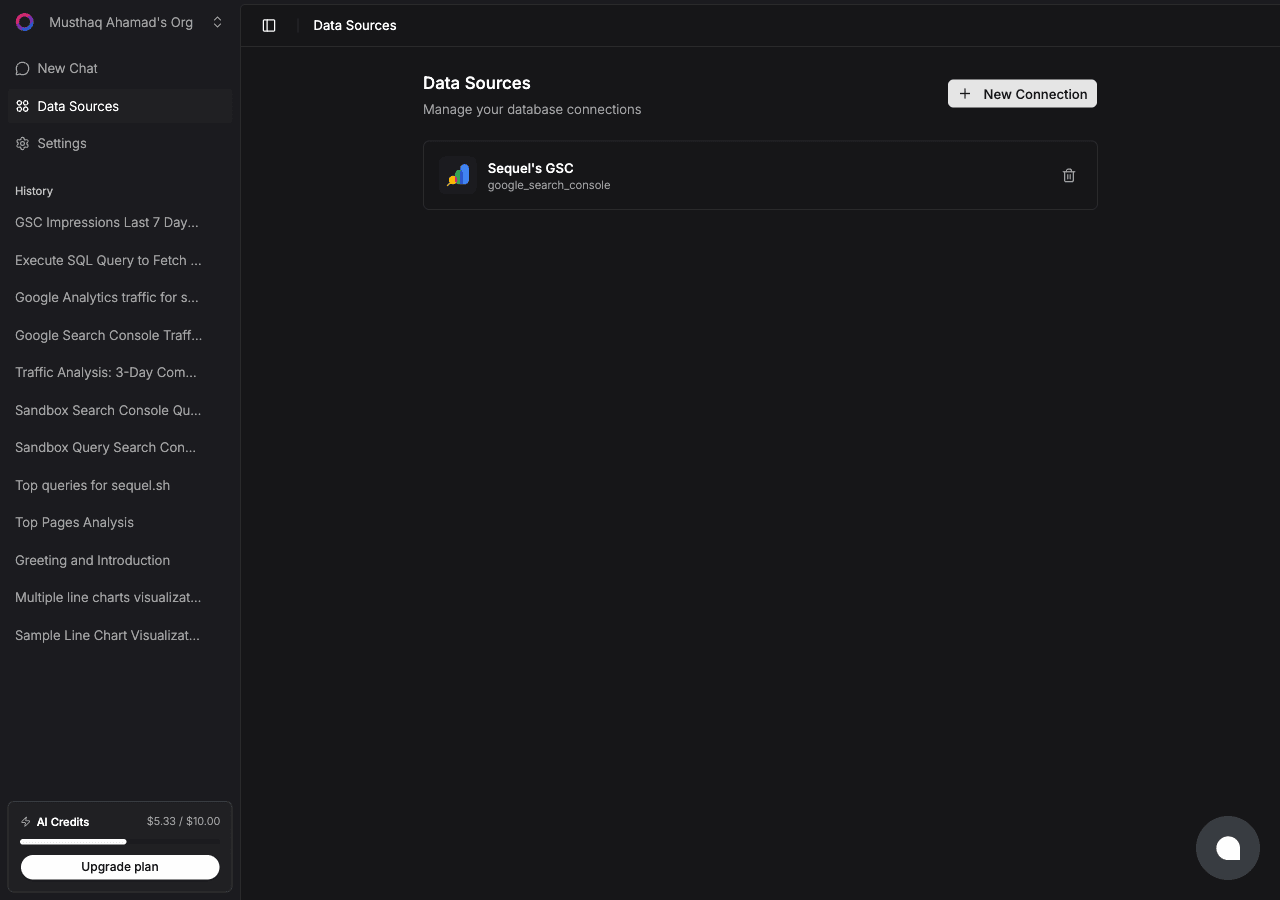
Sign in to sequel.sh and click Data Sources in the left sidebar.
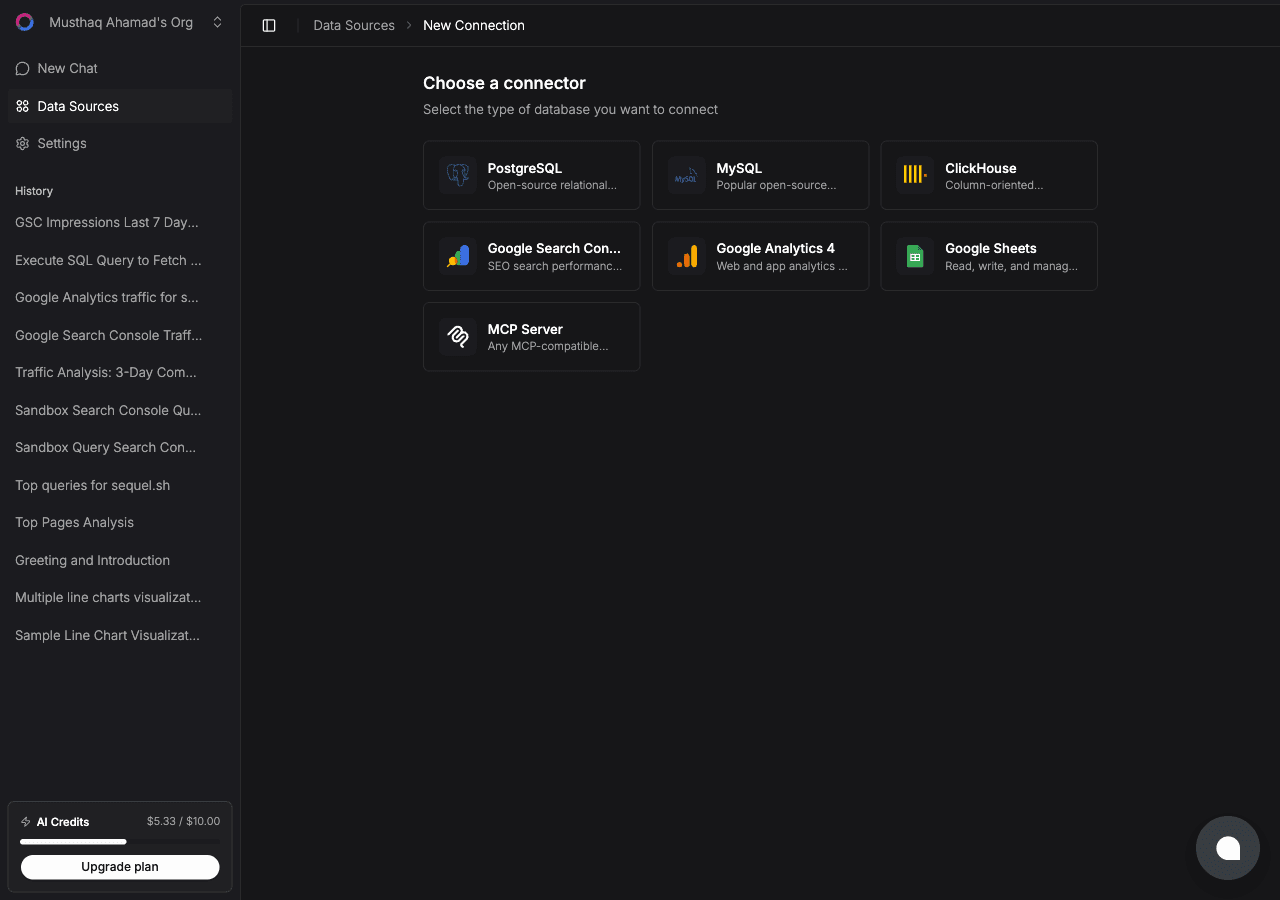
Click New Connection. On the "Choose a connector" page, select Google Search Console.
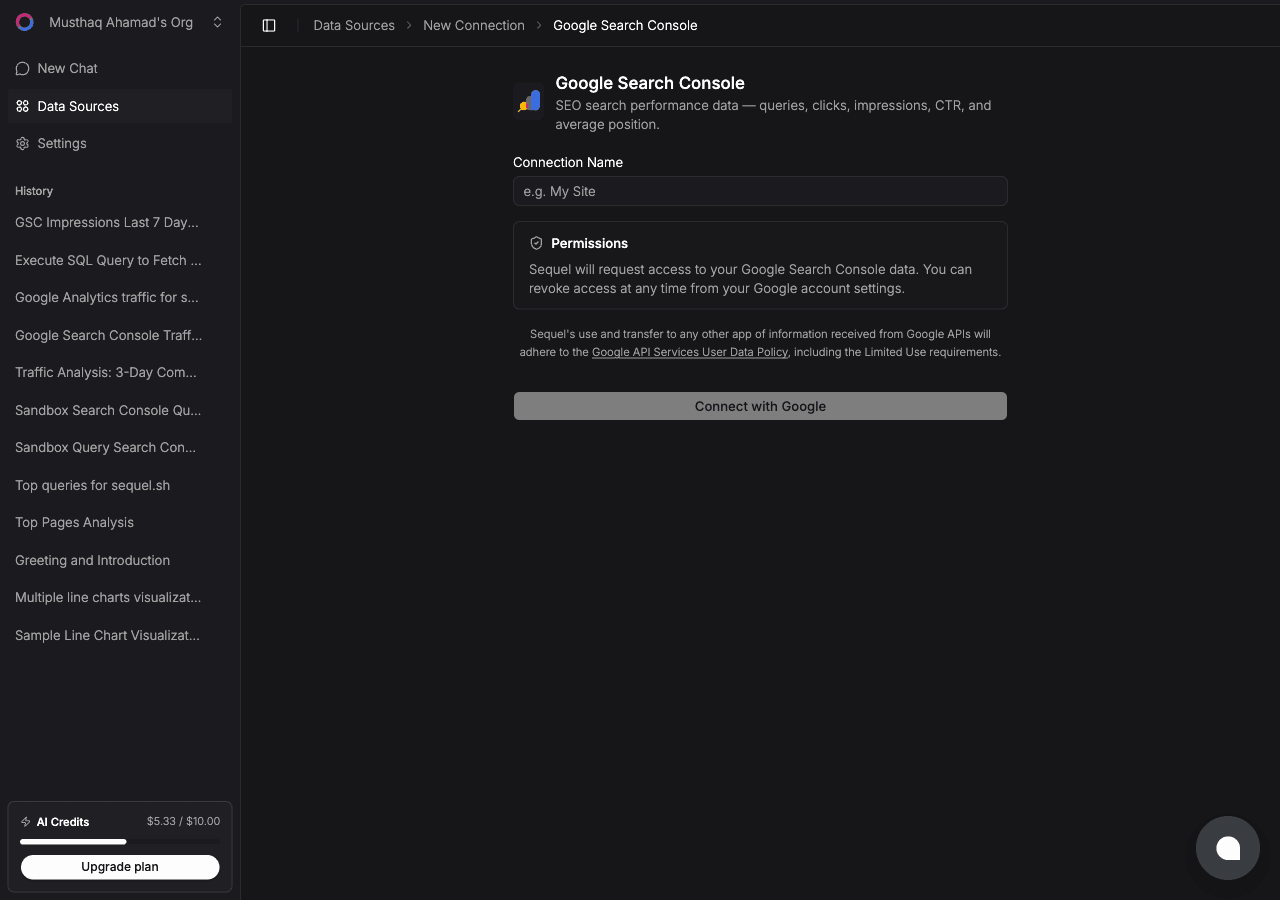
Enter a Connection Name, e.g. My Site GSC. Then click Connect with Google.
A Google OAuth window will open. Sign in with the account that has access to your Search Console property and grant Sequel the requested permissions. You'll be redirected back to Sequel with the connection saved.
Step 2: Get Your Sequel API Key
Click Settings in the left sidebar, then select API Keys from the settings navigation.
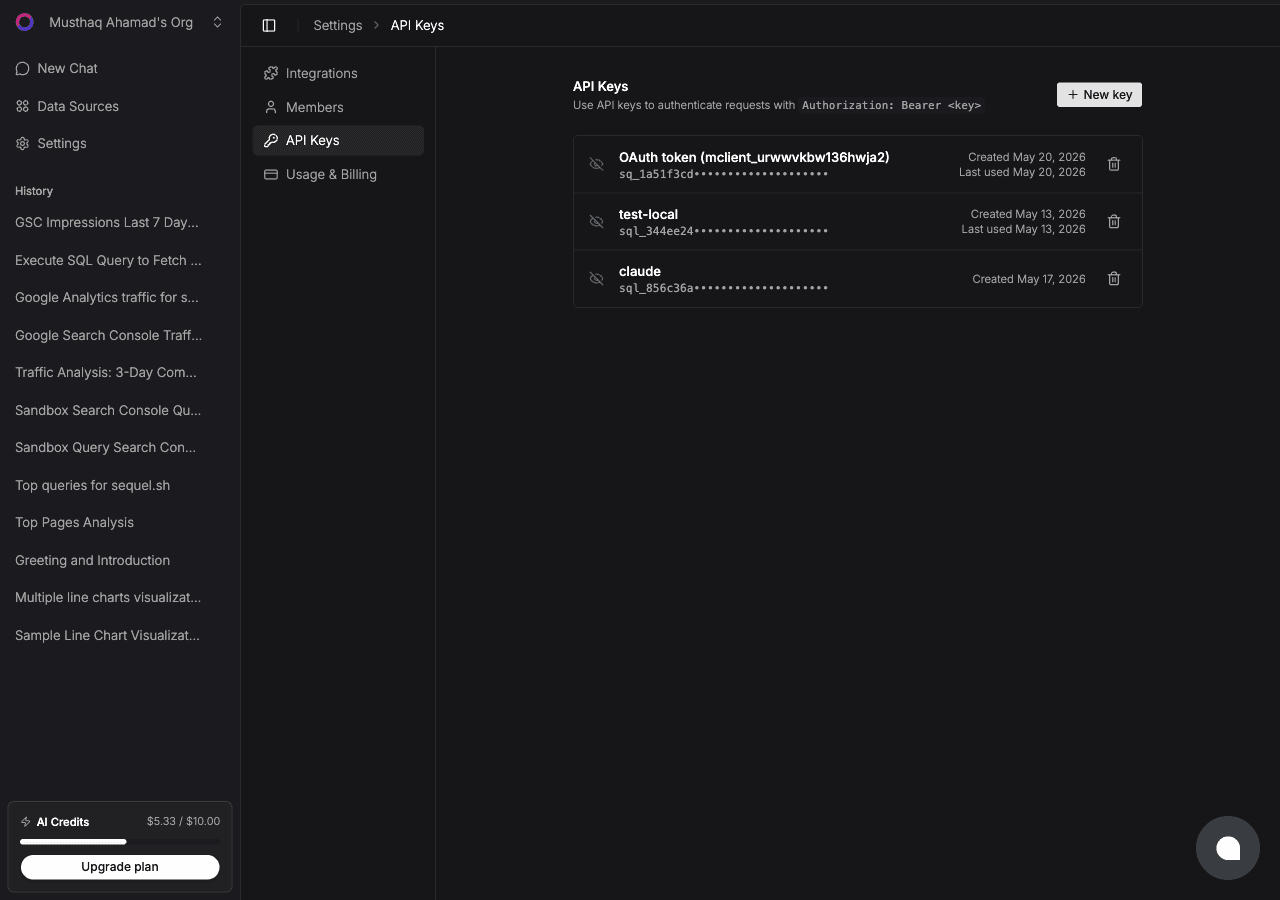
Click New key, name it claude-desktop-gsc, and copy the key (starts with sql_).
Step 3: Configure Claude Desktop
Open or create the config file:
- Mac:
~/Library/Application Support/Claude/claude_desktop_config.json - Windows:
%APPDATA%\Claude\claude_desktop_config.json
Add the Sequel entry:
{
  "mcpServers": {
    "sequel": {
      "url": "https://api.sequel.sh/mcp",
      "headers": {
        "Authorization": "Bearer sql_your_api_key"
      }
    }
  }
}
Replace sql_your_api_key with the key from Step 2. Restart Claude Desktop after saving.
Step 4: Query Your Search Console Data
Start a conversation in Claude Desktop:
What are my top 20 queries by impressions this month?
Which pages have been losing clicks compared to last month?
What's our click-through rate for queries containing 'how to'?
What You Can Do Now
- Keyword opportunity analysis: ask "Which queries rank between positions 5 and 15?" to find pages worth optimizing
- Content performance: ask "Which blog posts are driving the most clicks from search this quarter?"
- SEO reporting: ask Claude to write a plain-English monthly SEO summary based on your Search Console data
- CTR improvement: ask "Which queries have high impressions but under 2% CTR?" and prioritize title tag rewrites
- Trend detection: ask "Are there any queries that have significantly dropped in position over the past 30 days?"