
Short answer: no. Longer answer: the job is changing fast, and the analysts who pretend otherwise are the ones at risk.
The fear is understandable. An AI data analyst can now write SQL, run it, and chart the result in seconds. If a marketer can self-serve "which campaigns converted," what is left for the analyst? Plenty, as it turns out. Let us look at the data, the companies deploying these tools, and what working analysts are saying.
Demand for analysts is growing, not collapsing
Start with the numbers. The U.S. Bureau of Labor Statistics projects data scientist employment to grow 34% from 2024 to 2034, rising from 245,900 to 328,300 roles, with about 23,400 openings a year. Operations research analysts are projected to grow 21% over the same decade. CNBC's rundown of the fastest-growing jobs of the next decade put data roles near the top.
These are not the projections of a profession being automated away. More data, more questions, more decisions to support.
What AI actually automates
So if analysts are not disappearing, what is AI doing to the job? It is eating the repetitive parts.
- Writing standard SQL for common questions
- Cleaning and reshaping data into a usable form
- Generating the same recurring reports every week
- Answering ad-hoc questions that follow familiar patterns
This is real and significant. Uber's QueryGPT cut query authoring from about 10 minutes to 3. Pinterest reported a 35% speedup in writing SQL. The mechanical work that filled a lot of an analyst's week is now fast. We showed exactly how that pipeline runs in how AI data analysts work.
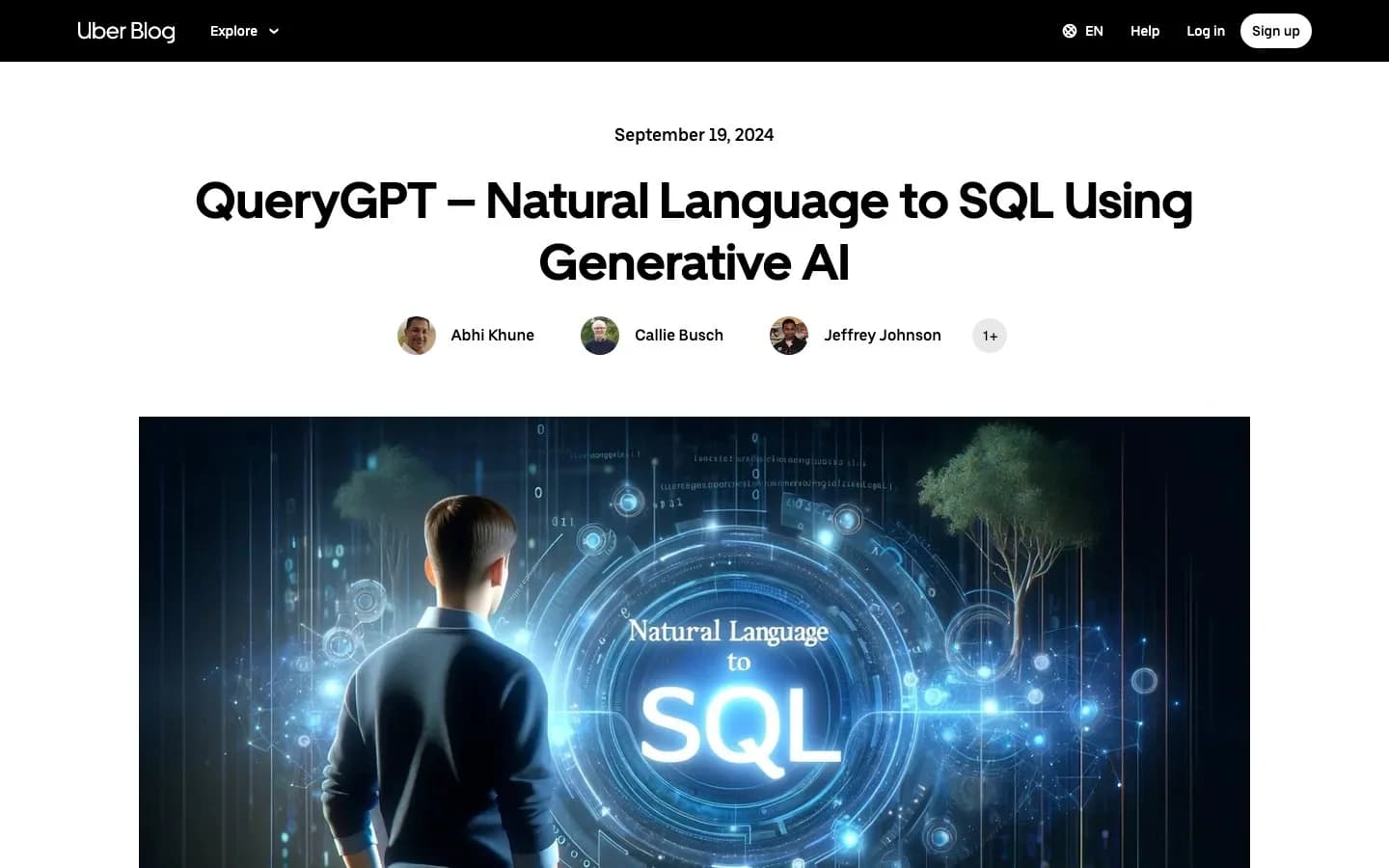 Uber's QueryGPT cut query authoring from about 10 minutes to 3 — automating the mechanical work, not the analyst.
Notice what those companies did not do: fire their analysts. They sped them up.
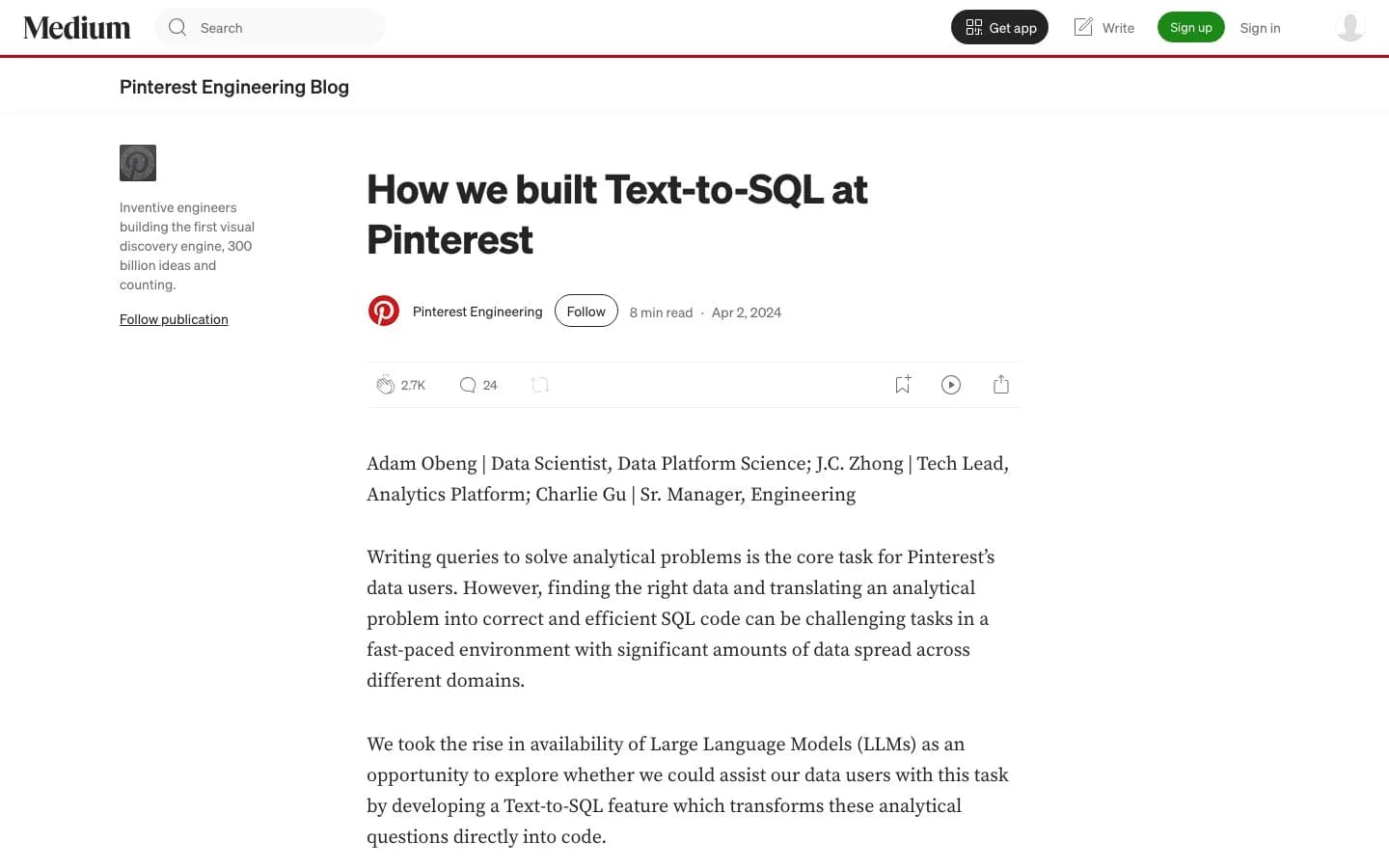 Pinterest's engineering team reported a 35% speedup in writing SQL with AI assistance — and kept their analysts.
What AI cannot do
Here is the part the doom takes miss. The high-value work was never the SQL.
- Framing the right question. A model answers what you ask. Knowing what to ask is the hard part.
- Interpreting ambiguous results. A number rarely speaks for itself. Context decides what it means.
- Validating output against reality. Text-to-SQL is not perfect, which is why a human reads the query. See how accurate text-to-SQL is.
- Communicating to stakeholders. Turning a result into a decision is a human craft.
A tool that writes SQL does not know your business. It does not know that last month's spike was a billing migration, not real growth. The analyst does.
What analysts themselves are saying
The most read thread on this in r/datascience reframes the whole debate. Its title: "AI isn't taking your job. Executives are." The post, from a director who sits in the tooling meetings, argues the technology is a pretext for cost-cutting, not a true replacement.
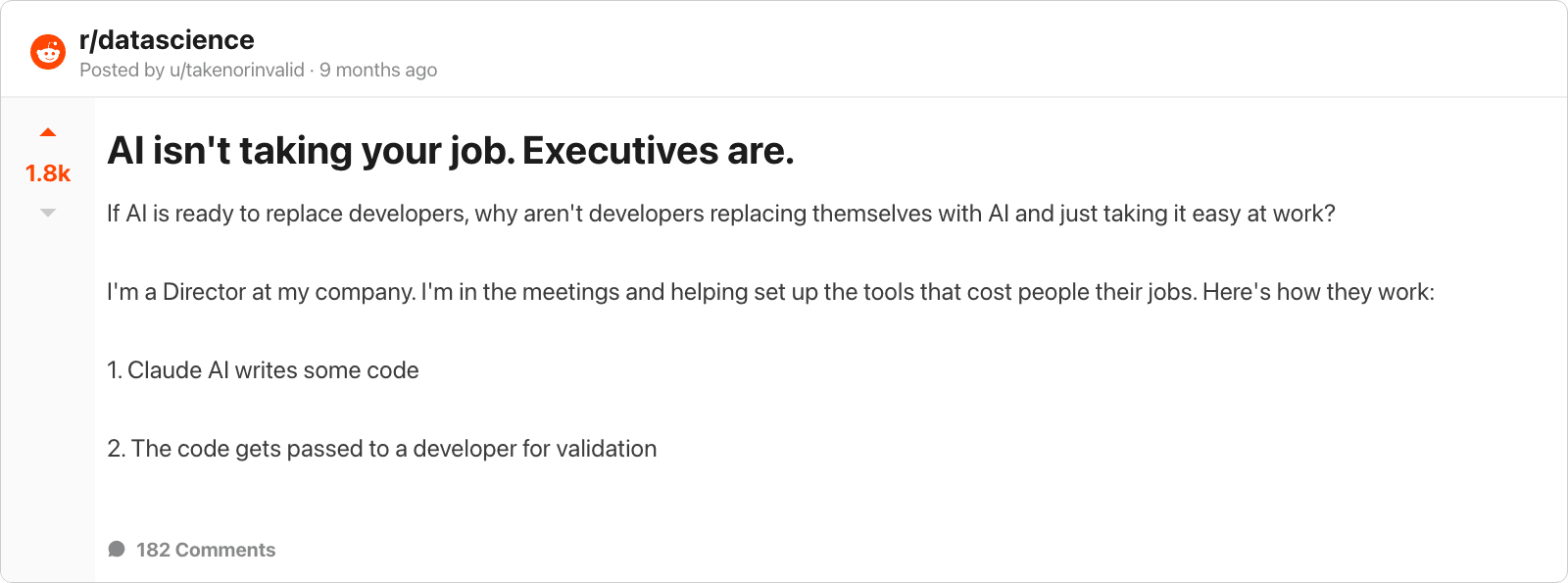 An r/datascience post with over 1,800 upvotes on who is really behind AI-driven layoffs.
The top reply names the pattern directly:
"It's the same playbook as past automation waves. The tool is secondary. The real change is the org deciding they can get 70% of the quality for 30% of the cost and calling it a win."
Another widely upvoted comment gets at why blind automation fails: validating output "requires you to know the logical and business context. And you can't learn that quickly." The recurring view across these threads is not "we are doomed." It is "the tool helps, but someone still has to know what they are doing."
The role is shifting, not shrinking
What changes is the mix of the job. Less time on mechanical query writing. More time on the judgment that needs a person.
| Less of this | More of this |
|---|---|
| Writing routine SQL by hand | Framing the questions worth asking |
| Building the same weekly report | Interpreting ambiguous results |
| Clearing an ad-hoc request queue | Validating AI-generated output |
| Formatting charts | Communicating findings and driving decisions |
Job postings reflect this. Fewer listings for pure report writers. More for analysts who can work alongside AI tools, interpret messy data, and translate findings for non-technical teams. On r/analytics, analysts describe the flip side of self-service: when non-technical colleagues lean on AI, someone still has to catch the mistakes, because "one bad join can quietly throw off reporting for months".
The real divide in 2026
It is not analysts versus AI. It is analysts who use AI versus analysts who do not.
A senior data scientist summed it up well in another r/datascience thread: "Me working with an AI helper is better and more productive than me not working with an AI helper. If I were to just blindly do whatever the AI said, it would not go well." That captures the stance that wins. An AI data analyst is a force multiplier. It clears the repetitive queue so you spend your hours on the work that moves the business.
There is a second-order win, too. When non-technical teammates can self-serve routine questions, the analyst stops being a query vending machine. That is the bottleneck most data teams want gone.
The takeaway
AI is not coming for the data analyst. It is coming for the boring half of the job, and most analysts will be glad to hand it over. The skill that compounds from here is judgment, paired with tools that make the mechanical work disappear.
If you want to give your team self-serve answers and your analysts their time back, get started free or see how Sequel works for teams.