
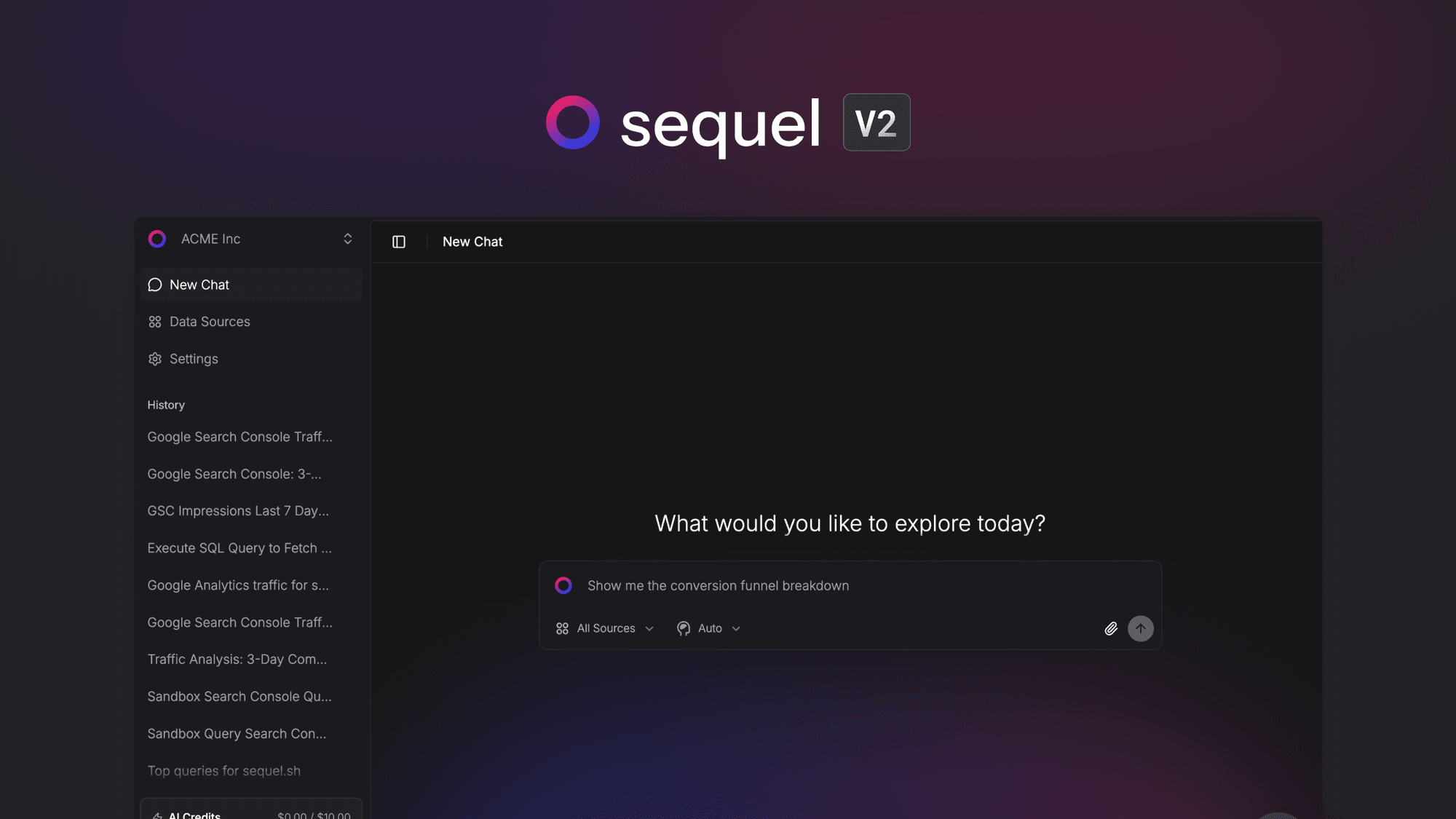
Today we're launching Sequel v2. It's the biggest rebuild since we started, and it changes what Sequel actually does for you. The old Sequel turned your question into a query and handed back a result. The new one does the whole analysis.
It plans the work. It writes and runs the queries. It drops the results into a Python workbench, then turns them into charts you can read. This is the version we wanted to build from day one.
Below, we'll walk through why we started Sequel, where the first version fell short, and what v2 changes. No jargon. Just what you can do now that you couldn't before.
Why we built Sequel in the first place
We've lost more hours than we'd like to admit writing SQL and squinting at tables. Most of our teammates couldn't do that at all. The data they needed sat behind a query language, or buried inside some dashboard tool. So they waited on someone technical. Or they just guessed.
That never sat right with us. When we first launched Sequel, the goal was simple. Make data accessible to everyone, not only the people who know SQL. We believed data shouldn't be gated behind one team's backlog.
The first version did that for the easy questions. Ask in plain English, get the SQL, get an answer. For a lot of teams, that alone was a relief.
Where v1 stopped short
Here's the thing we kept noticing. A query is rarely the end of the job.
Real analysis is messier than one SELECT statement. You pull some numbers, then you reshape them. You clean out the nulls. You join this month against last month. You combine data from two different places. Then you turn it into a chart that makes the point.
Say you want to know why churn ticked up last quarter. One query gets you the accounts that left. But the real answer needs more.
You group them by plan and signup month. You check whether their usage dropped before they cancelled. You pull a few things from a second tool. That's five or six steps, and most of them aren't SQL.
v1 stopped at the query. It handed you a result and left the rest to you. If the question needed more than SQL could express, you were back to exporting a CSV and opening a notebook. That gap bugged us. We'd removed the first barrier and left the second one standing.
What's new in v2
v2 closes that gap. Instead of stopping at the query, Sequel now carries the analysis all the way to the answer. Here's what that looks like in practice.
It plans before it runs
Ask a real question and Sequel doesn't just fire off one query and hope. It thinks through an approach first. Which tables matter, what to pull, how the steps fit together. Then it executes that plan.
Planning first means fewer dead ends and answers you can trust more. It's the difference between a junior analyst guessing at queries and a senior one who maps the work before touching the keyboard.
It also helps when a question is vague. A good plan surfaces the assumptions early, so Sequel isn't a hundred rows deep into the wrong table before anyone notices.
A workbench where the analysis continues
This is the part we're most excited about. Every query result now lands in a workbench, a live Python workspace built into Sequel.
Once the data is there, Sequel can do the things SQL can't. Reshape it. Clean it. Run the math. Merge several results into one. The workbench comes with the standard data analysis libraries ready to go, so it can push well past simple aggregation.
In practice, that means things like:
- Building a cohort table from raw events
- Deduplicating a messy export before counting
- Running a quick correlation or trend line
- Filling gaps so a number is worth trusting
The session stays open while it works. Each step builds on the last, the way you'd work through a problem yourself.
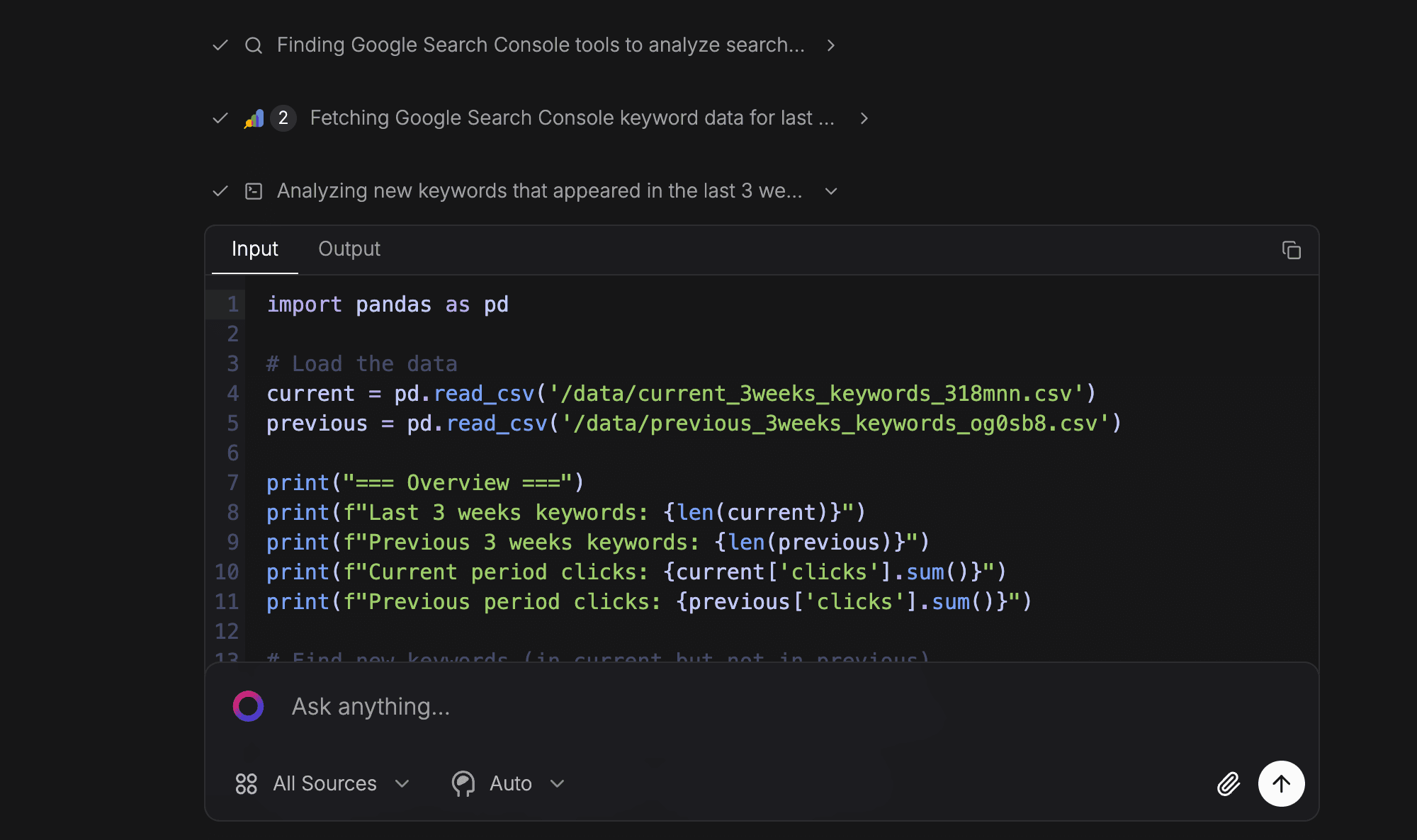 The workbench reads the CSVs from earlier query steps and continues the analysis in Python.
It remembers how it answered before
Good analysis repeats. The same questions come up week after week. v2 remembers how it solved a question before, so when you or a teammate asks something similar, the answer comes back fast. You're not paying the full thinking cost every single time.
And because your team shares a workspace, that memory builds up across everyone, not just you.
It learns how your team works
There are learning pipelines built into the agent. The more your team asks, the more it picks up. Your schema. Your terminology. The way your team defines a metric, or what "active user" actually means here.
That context compounds. Over time, Sequel builds an understanding that's specific to your team, not a generic model guessing at your tables. Questions that used to need a back-and-forth just get answered. New teammates inherit that knowledge on day one.
It's the difference between a contractor who needs everything explained and an analyst who's been on the team a year. v2 is built to become the second one.
One question across all your sources
Your data rarely lives in one place. Some of it's in a database, some in a warehouse, some in the tools your team uses every day. v2 lets you ask one question across all of it.
Sequel pulls what it needs from each source and combines the results into a single answer. You don't have to know, or care, that they were ever separate.
Ask for revenue by campaign, for example. Sequel might pull the orders from your database and the campaign data from your analytics tool, then line them up for you. The matching happens behind the scenes. You just get the number.
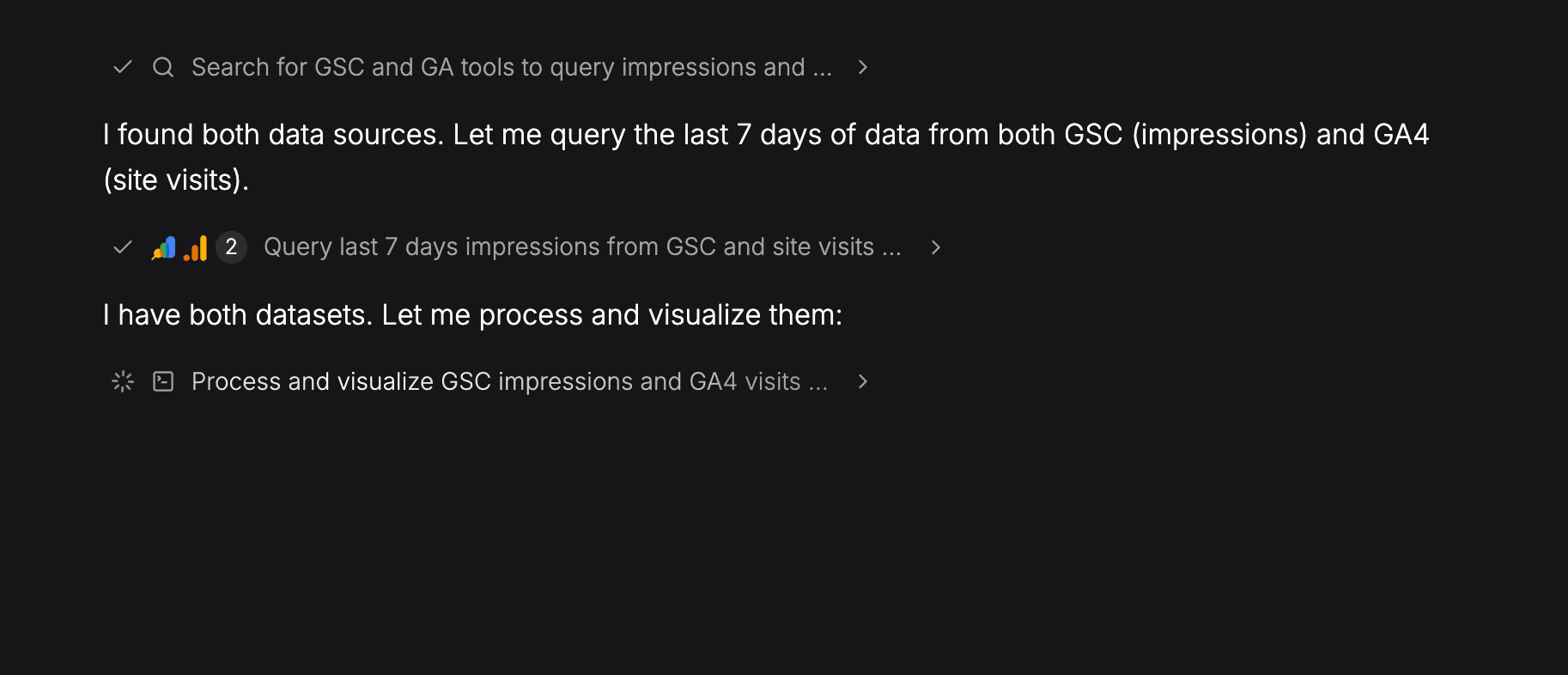 One question, two sources. Sequel queries each, then lines the results up for you.
Real charts, not just tables
A table answers a question. A chart makes you see it. v2 picks the right chart for the data and renders it for you, the way good conversational analytics should. Trends, comparisons, distributions. You ask, and the picture's there.
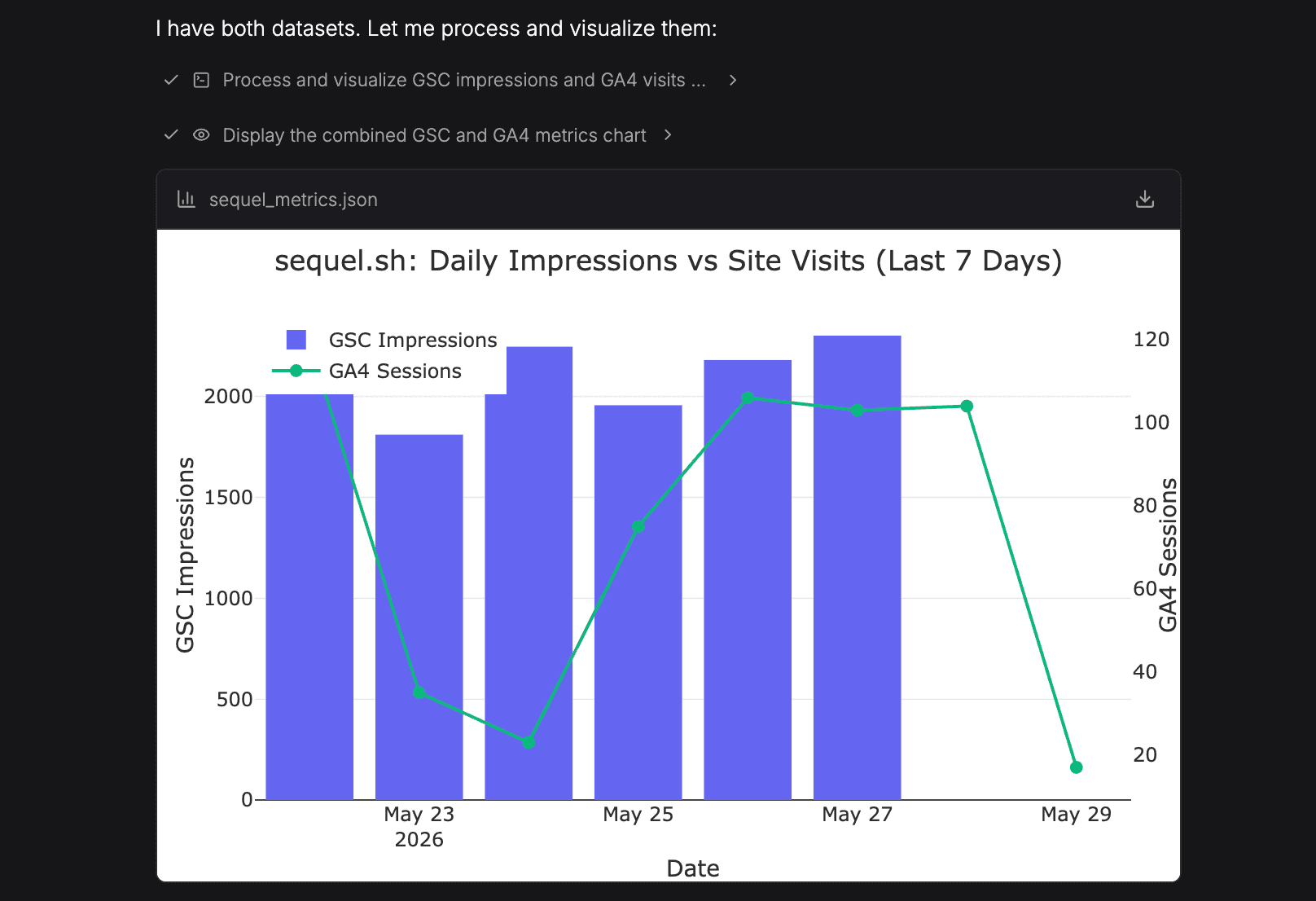 Two metrics on one chart, with the right axes and chart type chosen for the data.
Pick the model that fits the job
Not every question needs the same horsepower. v2 lets you choose between several frontier models, so you can match the model to the task. A quick lookup and a deep, multi-step analysis don't have to run on the same engine.
It works where your team already does
Most data questions never get asked. Opening a tool and hunting for the right dashboard is too much friction, so people guess instead. v2 closes that gap by meeting your team where they already work.
Mention Sequel in any channel and ask your question. The answer comes back in the thread, chart and all, where everyone can see it. No forwarding screenshots, no pasting numbers into a message.
You can also schedule recurring digests. A daily standup metric, a weekly revenue summary, a monthly cohort snapshot, each posted to a channel on its own. And Slack respects the same access rules as the web app, so people only see the data their role allows.
Faster, and harder to break
Two things drove this whole rebuild. Speed and reliability.
It's faster because Sequel plans up front and reuses work it's already done. Less wandering, less waiting.
It's harder to break because the analysis doesn't hinge on one perfect query. Sequel validates what it writes, and when SQL alone won't cut it, it moves into the workbench and keeps going. If a query errors out, it reads the error and tries again instead of giving up. Messy, real-world data is where the old version struggled most. This one holds up.
And it's still read-only by default. Sequel reads your data to answer questions. It doesn't write to your database or change anything in it. That hasn't changed, and it won't.
| Sequel v1 | Sequel v2 | |
|---|---|---|
| What it does | Turns your question into SQL | Runs the full analysis end to end |
| After the query | Hands you a result | Continues in a Python workbench |
| Working with results | SQL only | Reshape, clean, compute, merge in Python |
| Repeat questions | Runs from scratch each time | Remembers how it answered before |
| Multiple sources | One at a time | One question across all of them |
| Output | Tables, basic charts | Charts picked for the data |
Try it today
v2 is the version of Sequel we always pictured. Not a tool that writes a query for you, but a real data analyst that works the whole problem and hands you the answer. The kind of teammate who doesn't stop at the query, doesn't need a ticket, and doesn't mind being asked the same thing twice.
Prefer to stay in your own AI tools? Our MCP server brings Sequel's querying into Claude, Cursor, and ChatGPT too. You can see everything v2 does on the features page.
It's live now. Get started free and ask your data something hard.
– Musthaq & the Sequel team